

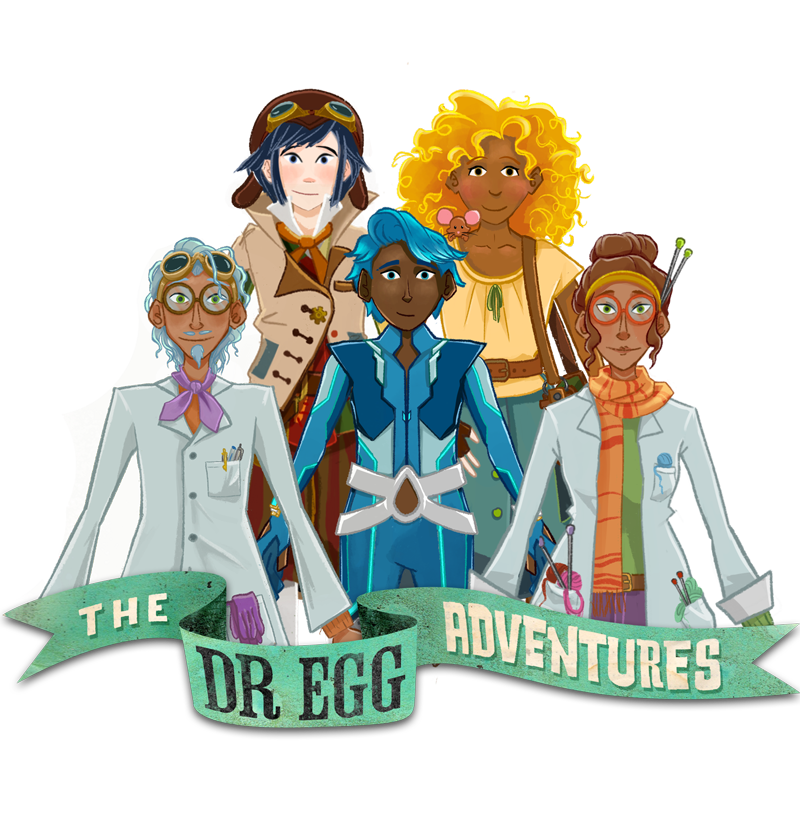
Today we talked to our very own creative director and founder of the EduTech company, Dr Egg Adventures, to discuss the company’s journey, passions and how we tailor our resources for stage two students needs and interests. 📚
Catherine Fagher developed her past in screenwriting into her current role of creative director and founder to bring you our new STEM learning resource, “Dr Egg Adventures Laboratory”. The virtual laboratory provides STEM curriculum aligned tools and resources for easability when teaching alongside English lessons and supports primary teachers to “learn as they teach”. 🔬📖
Sounds like the perfect addition to your classroom? Click Here 👉 https://bit.ly/39SlvhI
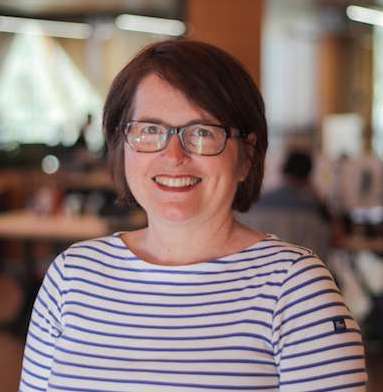
Mark: Thank you. Yeah. Um, Catherine, thank you so much for joining us. Um, How have you been, what have you been up to?
Catherine: Busy working on dr. Egg, really trying to take it to market now. So that’s quite exciting.
Mark: So for everyone, who [doesn’t] know, tell us about yourself, um, who you are, what do you do?
Catherine: Um, I’m the director, creative director of Dr Egg Adventures. I’m originally a screenwriter, a script writer. Um, and now I run an Edutech transmedia Edutech company and I’m sort of the CEO I’ve developed partnerships with school of education and we’re at the Macquarie incubator hub.
And, um, yeah, just really excited about creating a, an entertaining story world that also teaches science to school kids.
Mark: Yeah. So, yeah. Um, I believe, uh, this all started with a play you wrote, um, w, which was, which was Dr. Egg? No, um. As a screenwriter, what was your experience in watching your play come to life in Canada?
Catherine: Yeah. Well look, it, it has been, people have called it the egg that keeps on giving. Uh, I wrote a sort of set of biotech fables when I was, uh, well a while ago now when my, my. My son is now 18. I wrote it just after he was born. Uh, it was picked up by a puppetry theater. Terrapinn puppetry went to a master class.
They loved the story. They wanted to develop it. We went to Sydney Opera House and they loved the story. They said, would you develop it for kids? And they gave us $50,000, which was pretty amazing based on the story. We developed it with Jessica Wilson productions, she had left Terrapinn by that stage, we developed it independently, got money from Melbourne performing arts center.
And first of all, it was on at the Opera House. Uh, was puppetry. It was animation. It was pretty high quality at the time, very much a festival show. And we were really lucky that it then got taken to Canada, to Redmoon theater, a visual theater company, quite a famous one in Chicago. Uh, sorry. It later went to Canada.
So we first went to Chicago. That was exciting. A six week season. I got to go to Chicago and see it. We got 12 reviews, which was amazing. It’s the theater city it’s called. Um, it was great. It was just before the Obama election, there [were] a lot of debates on about STEM cells and stuff like that. We had scientists come and kind of argue with us about our content.
Cause it was about STEM. It was really about biotech ethics and like creating a creature in what it is to be a human. So it was a quite highbrow ethical kind of morality tale. But we, since – it had a lot of legs that went to Canada, it toured through Canada, and as a result, the Australia council gave us quite a bit of money.
To develop it. So the most exciting thing is seeing kids really get entranced with this world, uh, loving the puppets, the visuals, and coming up on stage afterwards and looking at all of the, the, the puppets and the animations that they’ve been watching was great.
Mark: Yeah, I, I’d imagine, um, creating for kids is quite challenging.
Um, not everything grabs their attention and whatnot. So what, um, what was the greatest challenge, uh, challenges in creating the doctor story world? Um, uh, from, from the screenplay?
Catherine: Yeah. Well look, what we found is that kids were very excited by the characters. So originally there was the one play dr. Egg and the man with no ear, but I’d created four fables and there were three kid characters in these three different worlds.
We decided to combine all the worlds and to make it sort of a whole universe, a science, a scientific universe with a, a good scientist and a bad scientist. And we created this. Kind of, well, a universe like you would for, I guess, um, you know, star Wars or, um, you know, the toll keen work. So, I think what happens is kids get really invested in the story.
What would they love? The characters, they love the world. They start to make up their own stories. Um, and then they’re interested in what each character can do. So each character has their own. Special genetic powers. One of them is perfect and can’t catch any diseases. That’s Ardash. He wants to catch a disease and find out all about diseases.
So kids get invested in the character. They want to do what that character can do. Each of the characters has got gadgets and tools that are their own special thing. And so kids will, they want Ardash’s, you know, hobo scooter, or they want Vivi’s special. One of the other characters, invent stuff and make stuff out of it.
Kind of junk from the slum lanes. So kids can make their own inventions. And the third character Cornelia is from a sort of a farmland. And so there’s a lot of kids that love animals and plants that little Dr. do little types and so they really love that character.
Mark: Um, it all sounds so good and so exciting, but I had assumed that there [were] some problems maybe you’re getting like.
Getting this to publications and whatnot. So what was your journey like to publication?
Catherine: Yeah. Well, so my, my book, so, um, as you said, it was a play, we’ve adapted it into a more interactive media style, but yeah. I was really aware ever since the play actually got based on a short story, I, and having been a script writer, trying to get scripts up, how hard that is, what I notice is people really want to adapt stories.
They want to adapt books. And I thought really the best thing would be to write this into a book. And then if people want to adapt it into animation or film, you know, you’ve got that book. So I did get money from the Australia council for the arts to write it into a full length chapter book, as well as the digital version.
Right. And so, um, that’s been exciting, but a long journey in itself to find a publisher. You know, I originally I was a script writer, so that’s been a lot to learn, uh, how to write for kids is a whole, you know, you think it would be an easy thing to write for kids, but it’s a whole, um, media in itself, medium in itself.
So, um, Yeah, look, I found a wonderful trans media publisher, herself, Tiny Owl Workshop. They, um, they work a lot with media and, and books and kind of interactive publication and fan fiction. They work a lot with fantasy world writers as well. So, um, she’s been very supportive of our process, but it’s not been without its hurdles.
It takes time. She’s a really excellent editor, but everything, uh, you know, everything takes time, but you know, I’m sure once the book’s launched, a lot of kids will enjoy it.
Mark: Yeah. And you’ve been riding for a while. And so now finally, um, you know, you’ve gotten so many grants for it and you could develop it.
Um, now. Your, so it was, uh, I’m assuming that you’ve written for kids, but is this your first time, um, what was your experience writing for children?
Catherine: The children, yeah. Will look. A lot of my early works were often for radio or for theater and they weren’t necessarily for children. So Dr. Egg really has been my first kids-kind of production.
Um, I think what’s interesting is so many people have loved it and supported it. I felt it had legs and I’ve kept working with it. That’s otherwise I wouldn’t just on my own go, Oh, I really want to do this thing so much, but it’s just had continuous support and interest. Um, writing for kids is interesting.
Some kids are super quirky. Super bright and they’re interested in very complex story worlds. Other kids really want to read simple things. So you need to really think about how you use, use your language. Um, yeah, mainly what I’ve discovered is that kids like to make up their own stories. And so they literally have taken our character outlines from the product overview or.
And they make stuff up and things, they make up a much better half the time than what I think of like, they wrote all these dialogues for our game, uh, with the two doctors talking together and they had the doctors making up chocolate that never runs out. They may, you know, sucky, lollies that cure all diseases.
So they come up with really great things largely to do with food.
Mark: Of course.
Catherine: Uh, and you know, it’s just kind of quirky stuff. So I think the funnier, the better for kids, they seem to really love humor.
Mark: Very imaginative, imaginative kids are. Um.
Catherine: I think also for me, I, the reason I love this age group, like it’s seven to 11 or eight to 12 stage two primary. And I remember that time for myself was a time seven to 11 was just. My imagination went wild. I loved, uh, you know, CS Lewis, The Lion, The Witch and The Wardrobe. I really loved story worlds myself. And I spent a lot of time in story worlds and I did really think how great that would be to create a really wonderful world for kids to explore at that age.
Because I think later on you get obsessed with, I dunno, music or romance, whatever, but
Mark: you move on,
Catherine: you move on from that sort of idea of an entire imaginative world. And I think scientific, imaginative worlds. Like I loved Wrinkle In Time and many books like that, they just really get your imagination going.
Mark: Yeah. So now you’ve got a set of books.
Um, an online laboratory. Uh, multitudes of science resources for kids. What inspired you to create such a vast, uh, transmedia world?
Catherine: Well, it’s really interesting. Sometimes. I think when I look at the character of Dr. Egg, who’s in a laboratory making cookie inventions, I think. Hmm. Maybe I’ve been like Dr. Egg, sort of, I suppose. Um, I dunno. I [was] always really interested in science and after my son was born, I worked with some other artists and we were really looking at new scientific technologies and sort of reproductive futures, but you know, scientific futures, but it was so fascinating. I became, I thought it’s a really great theme to explore. It was, um, a bit like, I don’t know if people were into space, it’s a very vast area of science and lots of stories come from there. Lots of ideas. Um, so that, that kind of inspired me. Um, I think also I went to South by Southwest in Austin, Texas. I saw really interesting examples of how kids could get really absorbed in games.
Mark: Yeah.
Catherine: And gamification of learning, like a lot of kids are intrinsically so motivated to play games and yet school, take it or leave it. Right. And so the more I heard, I heard some pretty amazing people talking there. Tracy Fullerton, Henry Jenkins, people who were like the leading game and interactive trans media theorists.
And I got really excited about just trying to get stuff out there. You know, we ran some game jams. We did, um, stuff to just really try our product out. And then I started to work in incubator spaces and they’d be game developers next door, and we’d work together and create hack games together and just try things out.
And I think from that sort of, um, Just, I suppose, trying things. Um, we worked as well with, um, we did try and get it up originally as a film. And a lot of people said, look, multi-platform is the way to go. Once we started going multi-platform we really did find there were lots of avenues.
Um, I’m just going to look at my notes for a sec.
Yeah. But look, one thing I did also do a doctorate of creative writing. And during that time I’d started to look at the scientific fables and morality tales. When I actually started to talk to a lot of scientists in the research, the scientists. I started to see how many really cool science solutions there were out there for a better world as well.
And talking to real life scientists a lot. I started to really start to think about the differences in it’s not a black and white thing. It’s not like, um, biotechs bad or genetic modifications. Terrible. It’s kind of much more nuanced than that. A lot of scientists are trying to create amazing solutions for, to grow more food for people in developing countries or to, to create. Outcomes for people whose kids are really sick and they need to help them with cancer. Or, and I started to see that scientists are a bit like artists. They are really curious. They want to help and they want to answer questions. And as an artist, I’m really curious. I love working in teams, scientists work in teams.
Yeah. So I feel like science and art is a really natural kind of. There’s a lot of convergence between scientists and artists and I guess media and digital media as well, because it really spreads ideas in lots of different ways. And a lot of young people like to see digital play with digital stuff and watch digital stuff.
Mark: Yeah. Yeah. Catherine, thank you so much for joining us. This has been lovely. Um, thank you.
Catherine: Thank you.
We Acknowledge the Traditional Custodians of the Wattamattagal clan of the Darug Nation, whose Cultures and Customs have nurtured, and continue to nurture, this land, since the Dreaming. We pay our respects to Elders past and present.
© 2020 Adventure Lab Pty Ltd. All rights reserved. View our Privacy Policy.